
 Get Audio+
 Hot FM
 Kool 101
 Eight FM
 Fly FM
 Molek FM
Bramayugam And The Horrors Of Being At A Powerful Man’s Mercy
 Thirsty for JUICE content? Quench your cravings on our Facebook, Instagram, TikTok and WhatsApp
A man who believes he is entitled to another person’s freedom is frightening enough without the supernatural.
In Bramayugam, Rahul Sadasivan takes this particular kind of arrogance and builds a folk horror film around it, set in a world where hospitality comes with conditions, gratitude is expected to resemble obedience, and a roof over one’s head can become a death sentence.
Set in 17th-century Kerala, the film follows Thevan, a folk singer who seeks refuge in the ancestral mansion of Kodumon Potti after escaping a deadly encounter in the forest. Potti receives him with food and shelter, presenting himself as a gracious host.
There is, however, one condition: Thevan is not permitted to leave. What begins as an uncomfortable arrangement soon descends into something far more sinister, as the mansion’s inhabitants become entangled in a history of deception, folklore, and abuse.
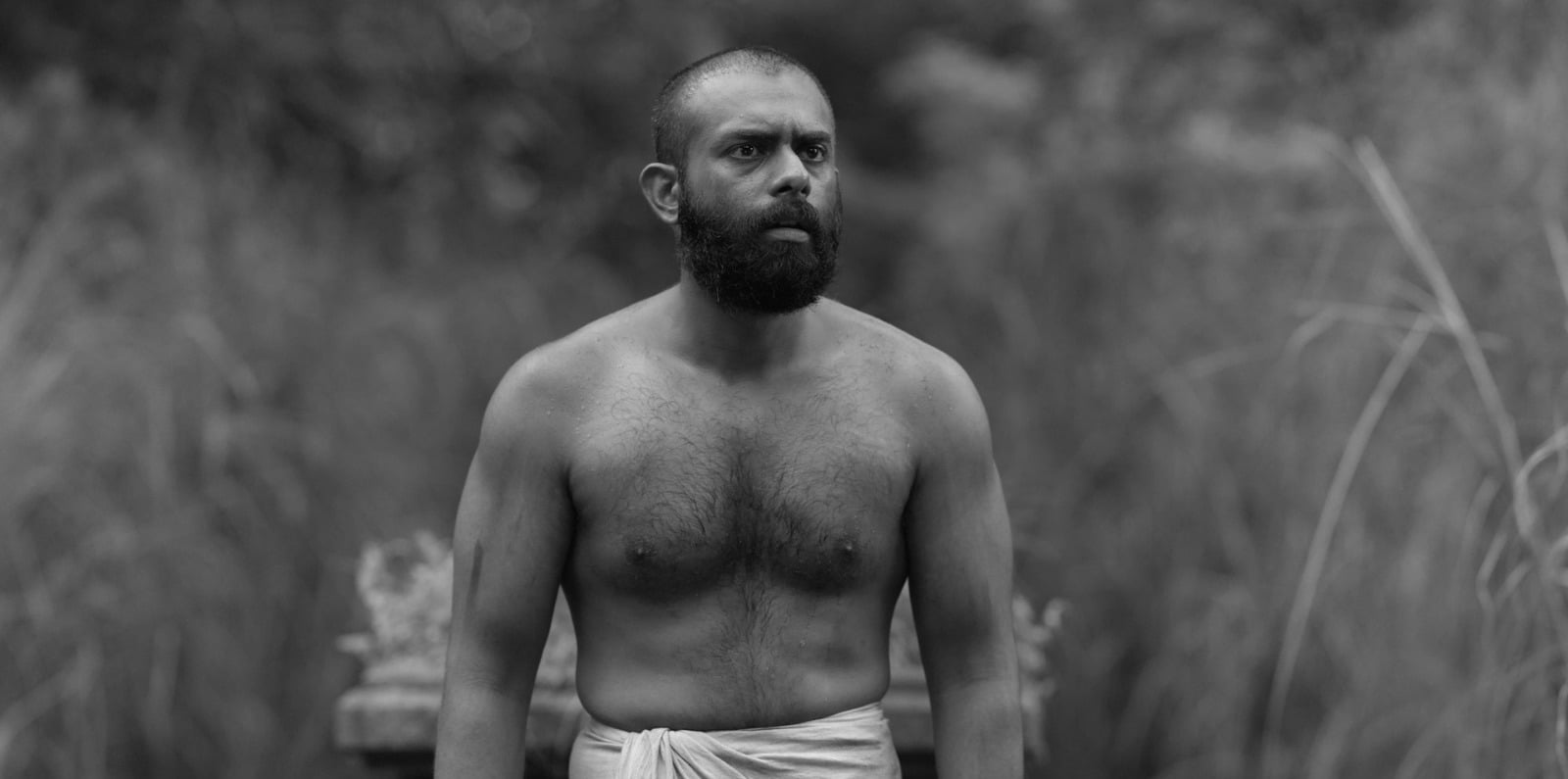
Shot entirely in black and white, Bramayugam is a film of considerable visual confidence.
Cinematographer Shehnad Jalal and production designer Jothish Shankar make the mansion feel genuinely unpleasant to inhabit. Its decaying interiors, narrow passages, and cavernous rooms seem to swallow the people living inside them, while the surrounding forest offers little sense of escape.
The monochrome photography does more than lend the film an old-world appearance. Without colour to soften the image, the textures of the house become harsher, the shadows more difficult to read, and the distinction between refuge and prison increasingly meaningless.
The film’s visual restraint is one of its strongest assets. It understands that a room need not contain anything visibly threatening to feel wrong. A conversation across a table, a figure standing at the end of a corridor, or the simple act of entering another room can carry an uncomfortable weight. The mansion rarely needs to announce itself as a place of horror. Its inhabitants already behave as though something terrible is perfectly normal.
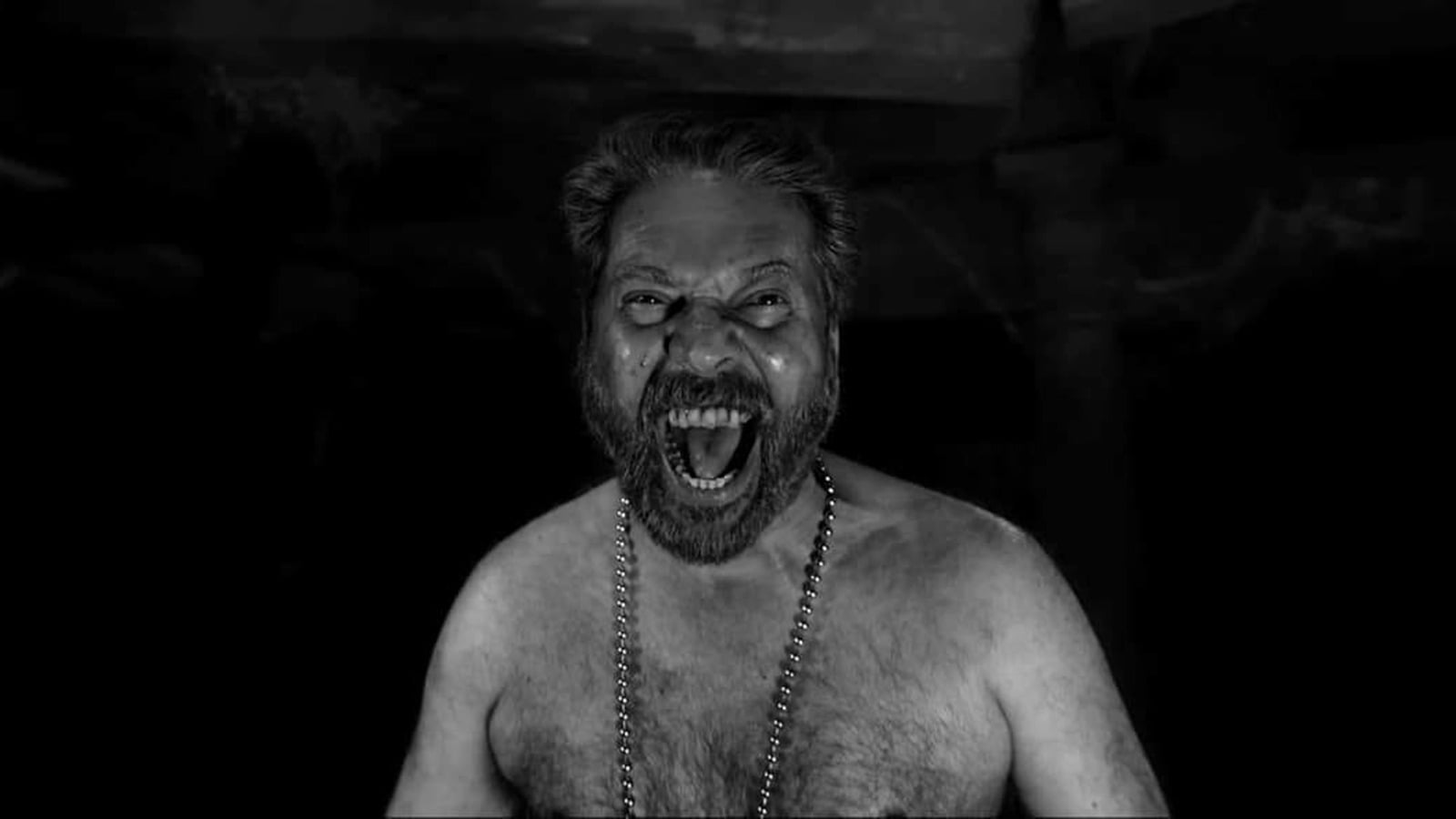
Much of that unease comes from Mammootty, whose performance as Kodumon Potti is the film’s centre of gravity.
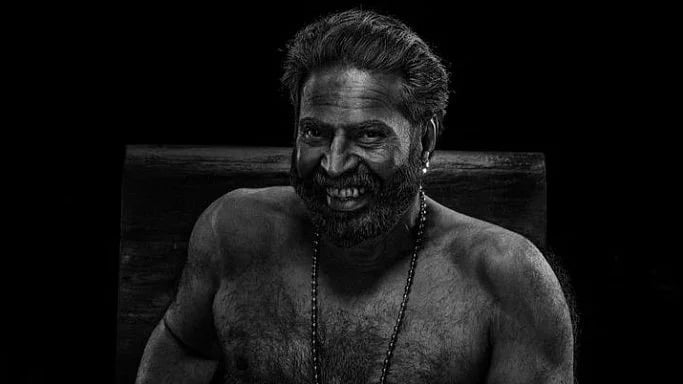
He plays the character with a composure that makes his cruelty all the more repellent. Potti can be charming, even amusing, but there is always something unpleasant beneath his manners.
His threats do not require raised voices, and his authority rarely needs to be demonstrated twice. He behaves like a man who has never had to consider that someone might refuse him.
What makes Potti such a compelling antagonist is that he does not appear to regard himself as cruel. To him, his control over the people around him is simply the natural order of things.
He can offer a man shelter and then deny him the right to leave, seeing no contradiction between the two. Mammootty captures this warped sense of entitlement with remarkable precision, making Potti’s casual manner more disturbing than any theatrical display of villainy could be. The character does not merely want obedience. He assumes it is owed to him.
Arjun Ashokan gives Thevan a necessary vulnerability. Rather than turning him into the sort of horror protagonist who inexplicably retains his composure in the face of mounting danger, Ashokan allows fear to dictate much of his behaviour.
Thevan is observant and resourceful, but he is also a man trapped in circumstances he does not understand. His desperation is convincing because the film never pretends he has more control than he does.
Sidharth Bharathan is similarly effective as the mansion’s cook, whose guarded manner hints at a long history of submission and resentment. His relationship with Thevan offers a possible route out of their predicament, though neither man can afford to trust the other completely. Survival in Potti’s household requires a degree of cooperation, but the same conditions that make solidarity necessary also make it precarious.
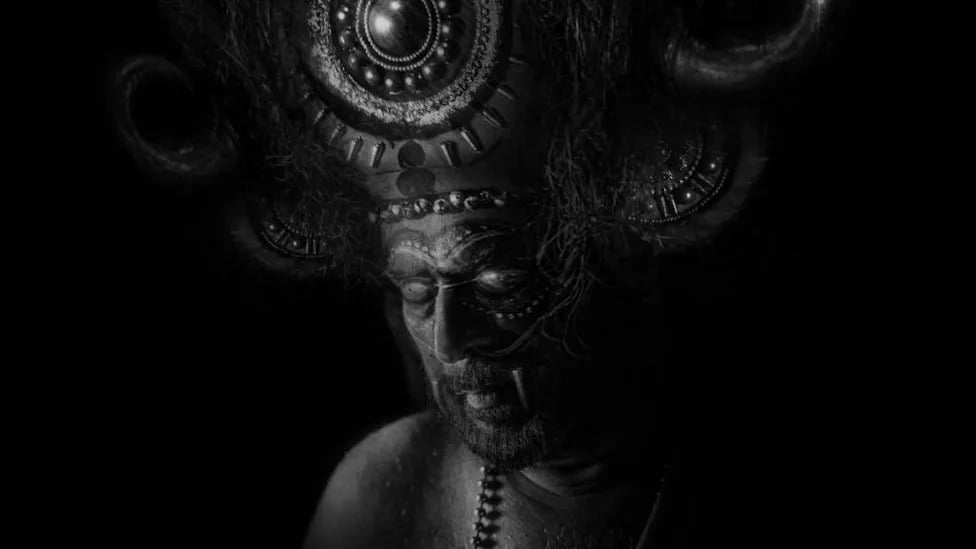
It’s through these relationships that Bramayugam develops its more interesting ideas.
Its mythology is not merely a collection of supernatural horrors assembled to frighten the audience.
The chathan, a folkloric being subjected to human cruelty, complicates the film’s understanding of victimhood and monstrosity. Its history provides context for its violence without making that violence any less troubling. The distinction matters: understanding how something becomes monstrous is not the same as absolving it of what it does.
The cook’s position introduces another uncomfortable question. Having lived under Potti’s authority, he has every reason to want it destroyed. Yet the prospect of taking Potti’s place raises the possibility that what he desires is not freedom from the system, but freedom to occupy its highest position.
The film recognises the difference between overthrowing a tyrant and dismantling the conditions that made his tyranny possible. One requires the destruction of an existing order; the other requires questioning why anyone should possess such power in the first place.
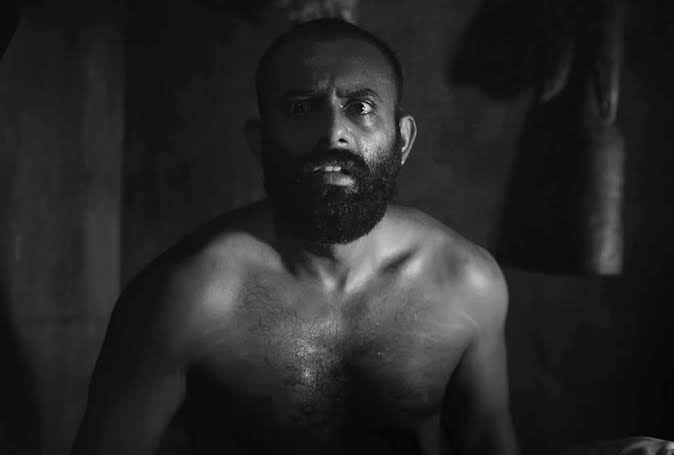
This is where Bramayugam becomes more than a story about a haunted mansion.
The house operates according to a hierarchy that its inhabitants cannot easily escape, with isolation and fear gradually wearing down their sense of self.
Thevan’s imprisonment is physical, but it is also psychological. The longer he remains, the more his circumstances dictate what he considers possible. Even the prospect of escape becomes difficult to separate from the fear of what awaits him outside.
Christo Xavier’s score and the film’s sound design complement this atmosphere without constantly demanding attention. Silence is allowed to linger, and ordinary sounds acquire an unnerving significance within the mansion’s confines.
The film is at its most effective when it trusts the audience to sit with that discomfort rather than rushing to explain it. Its horror comes less from what appears on screen than from the knowledge that the characters have very little say in what happens next.
Still, Bramayugam is not entirely immune to the limitations of its own approach. Its deliberate pacing occasionally becomes cumbersome, while some revelations lack the dramatic precision needed to make their full impact.
The film has plenty to say about authority, subjugation, and the persistence of violence, but its thematic ambitions sometimes outpace its storytelling. There are moments when the atmosphere does more work than the screenplay, and ambiguity, useful as it can be, occasionally leaves the drama feeling underdeveloped.
The conclusion, however, remains faithful to the film’s bleak understanding of power. Without giving away its specifics, the ending refuses the comforting idea that removing one monstrous individual is enough to resolve the conditions that allowed him to thrive. Authority can pass from one person to another without changing its essential character. The face at the top may change; the arrangement beneath it can remain intact.
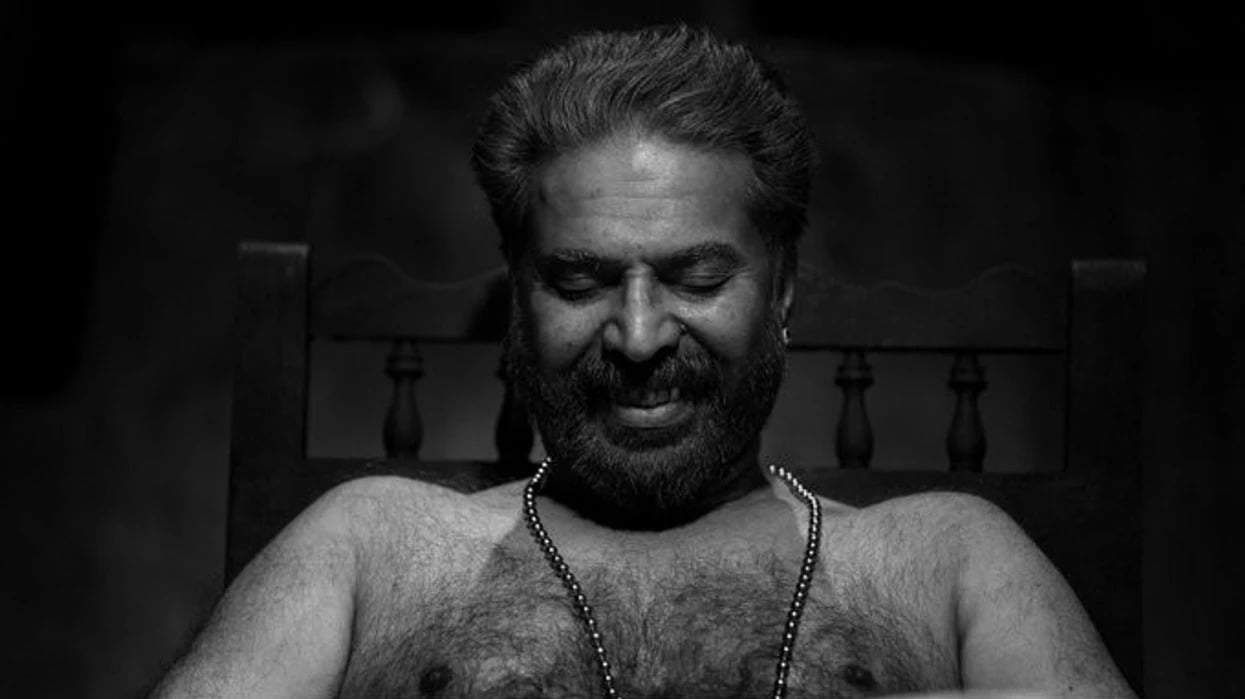
That idea gives Bramayugam much of its lasting weight.
Its folklore belongs to a particular cultural and historical setting, but its concerns are hardly confined to either. The film examines the entitlement of those who rule, the compromises demanded of those who serve, and the ease with which a victim can become an accomplice when offered a share of the authority that once oppressed him.
It’s an unsettling cycle, made more so by the fact that no supernatural explanation is needed to recognise it.
Bramayugam, which translates to ‘the age of madness’, occasionally mistakes obscurity for depth, but its strongest ideas survive its narrative shortcomings. Mammootty’s performance, the uncompromising monochrome photography, and the film’s treatment of folklore give it a distinct identity within the genre.
More importantly, Sadasivan understands that a monster need not be an exception to the world around him. Sometimes, he is simply the person everyone else has been taught not to challenge.
The mansion is full of horrors, but Kodumon Potti’s greatest offence is not that he is powerful. It is that he has mistaken power for permission, and built a life in which everyone else is expected to agree.
For more features, click here.
Follow JUICE on Facebook, Instagram, and TikTok.

Missed these?

“Too Much”: Netizens Fear TikTok Trend That Pranks Kids With Kuntilanak Audio Is Traumatising & Extreme
Maybe try the other TikTok trends instead?

Local Actress Bodyshamed By Netizens And Brought To Tears While Filming ‘Live’ Makeup Tutorial
Netizens can be ruthless.

“My Nipples Are Swelling”: Netizens Spam Local Athlete’s Instagram Post With Obscene Comments
He has now deleted the comments…