
 Get Audio+
 Hot FM
 Kool 101
 Eight FM
 Fly FM
 Molek FM
Oxford Uni Fails To Name Indonesian Researchers in Rare Rafflesia Discovery
 Thirsty for JUICE content? Quench your cravings on our Facebook, Instagram, TikTok and WhatsApp
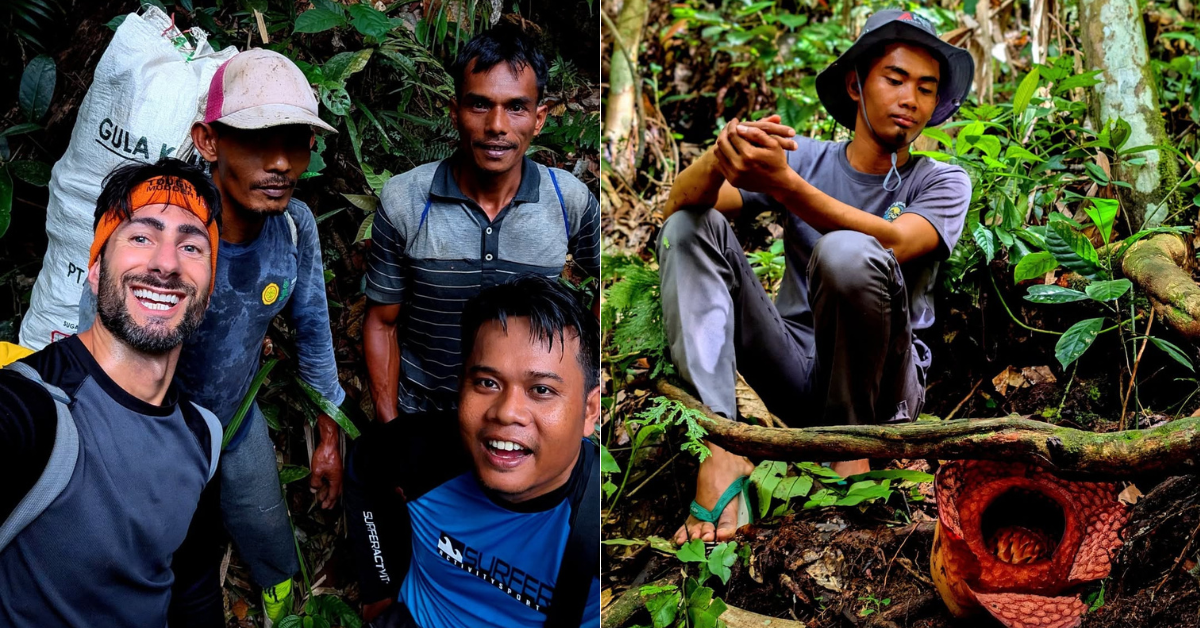
In the depths of a Sumatran rainforest patrolled by tigers, a small but passionate team of botanists and guides carried out a mission that most people only dream of: to witness the bloom of Rafflesia hasseltii, a flower so rare it’s “seen more by tigers than people.”
Among them were Joko Witono (from Indonesia’s National Research and Innovation Agency), Septi Andriki (a local conservation activist), and Iswandi (from a community forest-management institute).
These three know the forest in their bones: the hidden paths, the host vines, the rhythms of the land.
Together with Dr Chris Thorogood of Oxford University’s Botanic Garden, they trekked day and night through thick undergrowth and across tiger territory, with only permits and a fragile hope as their guide.
An almost mystical moment
The team saw the Rafflesia unfurl under the cover of darkness, a bloom so fleeting that it only stays open for a few days. It was an emotional moment for Septi Andriki, who’d been searching for the elusive flower for 13 years. He can be seen weeping after finally finding the flower in the video below:
A life-changing encounter in Sumatra: Rafflesia hasseltii grows in just a few remote, tiger-patrolled rainforests, accessible only under permit and seen by few. We trekked day and night to find it, and look what happened when we did: pic.twitter.com/8RpiXZSFgD
— Chris Thorogood (@thorogoodchris1) November 19, 2025
Thorogood later described the experience as “life-changing.”
It was all supposed to be a momentous occasion (and it still is, of course), but things have gotten a bit uncomfortable (and infuriating) now.
When Oxford University shared the discovery on its official social media channels, the post emphasised its own scientist—Dr Thorogood—trekking through tiger-patrolled rainforests, while relegating the others as a mere “team” with none of their names mentioned.

Their exclusion from direct credits completely betrays their decades of field knowledge, dedication, and sheer hard work, without which none of this would have been possible in the first place. It’s a sentiment echoed by many on social media.
Former Indonesian education minister Anies Baswedan even called the university out, saying that Joko, Septi, and Iswandi are not “non-playable characters” (NPCs) in this story, but real scientists and conservation heroes whose contributions deserve proper acknowledgement.
Some X users have pointed out that this is part of a broader pattern where researchers or institutions from the Global South labour in difficult, risky environments, only for Western institutions to become the face of the discovery. It’s objectively unfair and perpetuates a modern form of colonialism.
It’s been four days since Oxford University shared the post on their socials (and four days of constant flaming by netizens), but they haven’t ammended it to give the proper credits, at least at the time of writing.
For more news, head to JUICE Malaysia.

Read more:

Govt Set To Ban M’sians Under 16 From Social Media In 2026
Fahmi said platforms are expected to roll out verification tools next year, adding that online safety isn’t only a government responsibility.

Namewee Says He Is Ready For Any Job To Stay Afloat Amid Legal Tiff
With court dates still months away, Namewee said he is doing his best to stay afloat and earn an honest living, whether through music, production work, or manual labour.
Papaya vs Durian: Should M’sia Rethink Its National Fruit?
Should Malaysia’s national fruit really be one that people forget about, or one that’s impossible to ignore? The durian makes a strong case for itself.