
 Get Audio+
 Hot FM
 Kool 101
 Eight FM
 Fly FM
 Molek FM
The RM10 ‘Adidas Kampung’ Might Be The Greatest Outdoor Shoes Ever
 Thirsty for JUICE content? Quench your cravings on our Facebook, Instagram, TikTok and WhatsApp
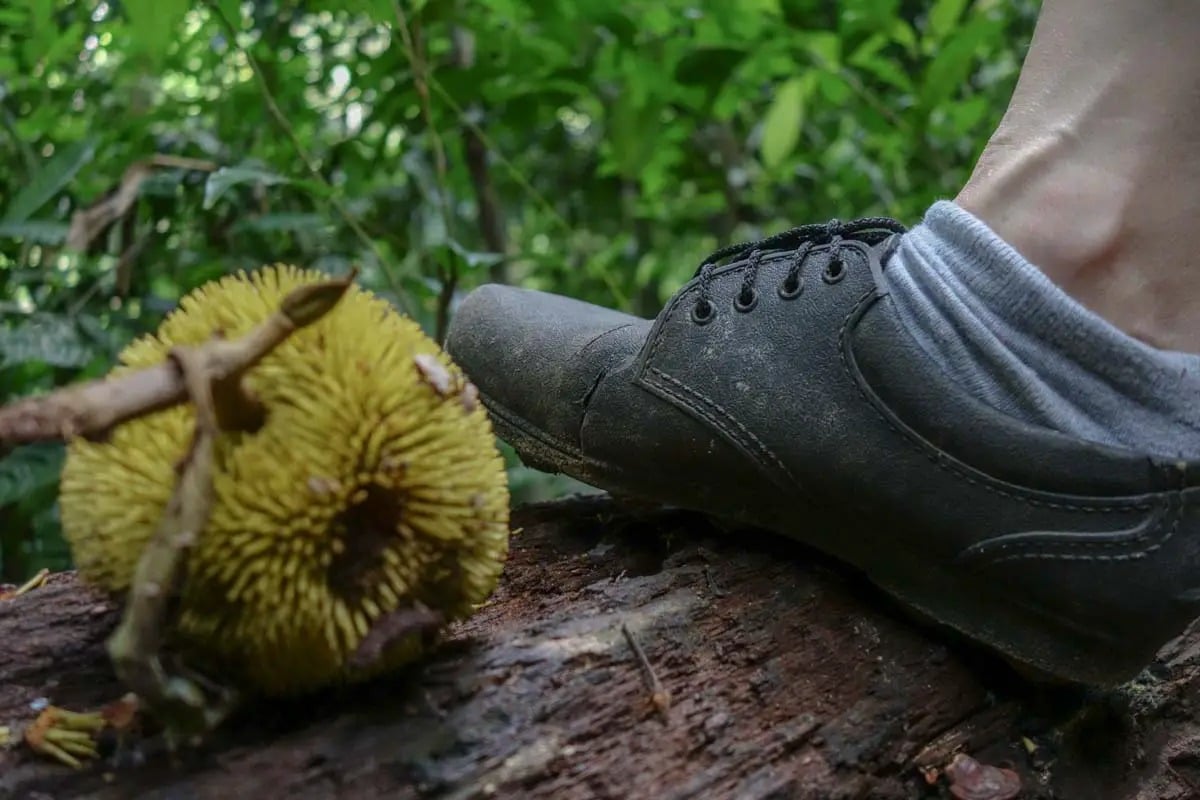
Long before gorpcore became fashionable…
Before hiking boots started costing as much as a domestic flight, and before sneaker enthusiasts began treating “heritage” and “technical innovation” as spiritual concepts rather than marketing terminology, Malaysia had already produced what might genuinely be one of the greatest outdoor shoes ever made.
It costs roughly RM10, can usually be purchased alongside plastic buckets and gardening supplies, and despite what its name suggests, has absolutely nothing to do with Adidas.
The Adidas Kampung occupies a curious and uniquely Malaysian space in the cultural imagination. It is simultaneously a practical work shoe, a mountaineering legend, a tourist curiosity, and perhaps the only piece of footwear in history whose reputation was built not through advertising campaigns or celebrity endorsements, but through decades of quietly surviving some of the harshest terrain in Southeast Asia.
While outdoor brands spend millions developing proprietary cushioning systems, waterproof membranes, and aggressively trademarked sole technologies, the enduring appeal of the Adidas Kampung stems from a much simpler proposition…
When your environment consists primarily of mud, rain, river crossings, slippery roots, and humidity levels capable of humbling even the most expensive imported hiking boots, simplicity is often the most sophisticated technology of all.
To reiterate and clear up the obvious question first: no, the Adidas Kampung is not manufactured by Adidas.
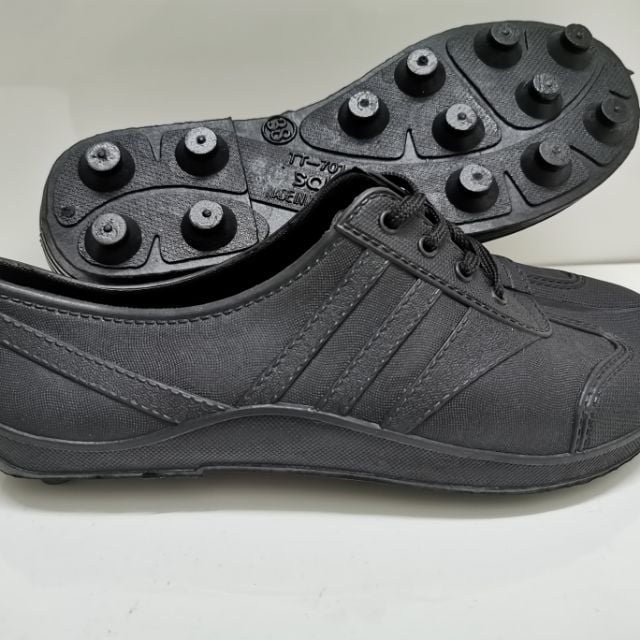
The nickname is believed to have emerged because of the shoe’s distinctive side stripes, which bear a passing resemblance to the German sportswear giant’s iconic branding.
Combined with its vaguely athletic silhouette, the resemblance was apparently enough for Malaysians to collectively decide that the shoe deserved its own unofficial title. According to historical accounts, adidas has never produced, licensed, or claimed ownership of the Adidas Kampung, making it perhaps one of the most successful branding associations ever achieved without the involvement of the actual brand itself.
The shoe itself is remarkably straightforward. Typically made from moulded latex rubber, the Adidas Kampung is lightweight, waterproof, durable, and fitted with aggressive studded soles designed to grip slippery surfaces. There are no air pockets, carbon plates, energy-return systems, or proprietary materials developed in a laboratory by engineers wearing white coats. There is, quite simply, rubber.
And somehow, that has proven to be enough.

The story of the Adidas Kampung begins not in a global headquarters or a design lab, but in the interior of Sabah.
The shoe was first introduced on 19 September 1974 in Keningau by Tuan Lakai Adang, a member of the Police Field Force (PFF). The problem he was attempting to solve was not a lack of innovation in footwear, but rather an excess of impracticality. Conventional leather boots performed poorly in tropical rainforest environments, becoming heavy when wet, difficult to dry, and cumbersome on muddy terrain.
The solution that emerged was almost deceptively simple: create a shoe that was inexpensive, lightweight, waterproof, and capable of providing reliable grip in tropical conditions. The resulting footwear was not designed to make a fashion statement, nor was it intended to become a symbol of Malaysian ingenuity. It was simply designed to work.
Yet that practicality would ultimately become its greatest strength.
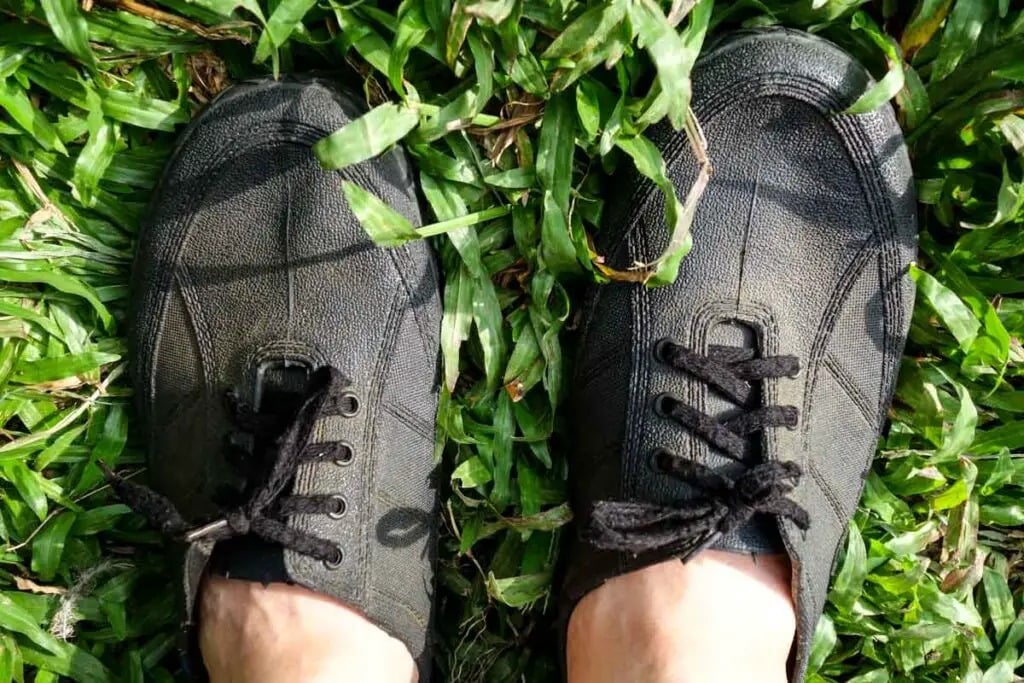
To anyone unfamiliar with tropical trekking, the Adidas Kampung can appear almost comically under-equipped.
There is no ankle support, no cushioning system, no waterproof membrane, and certainly no technical specifications printed on the box promising to help wearers “conquer the elements” or “redefine outdoor performance.”
However, according to hikers, mountain guides, farmers, rescue personnel, and outdoor enthusiasts who have worn them for decades, these apparent shortcomings are precisely what make the shoes so effective.
The thin rubber sole allows wearers to maintain a direct sense of the terrain beneath their feet. The aggressive studs provide exceptional traction on mud and wet rock surfaces. The shoes drain and dry rapidly after river crossings, weigh very little, and can be replaced for less than the price of a cafe brunch.
The tropical rainforest, after all, remains one of the few environments on earth that is entirely indifferent to how much money you spent on your outdoor gear.
This practical effectiveness has helped transform the Adidas Kampung from a humble work shoe into something approaching folklore. Foreign backpackers have returned home and written essays praising its performance. Adventure bloggers have declared it superior to premium hiking footwear for tropical environments. Online forums have hosted passionate debates about which manufacturer produces the best version, a level of discourse typically reserved for wine, watches, and mechanical keyboards.
In 2017, a shoe wholesaler also revealed that orders went up by an astounding 30% after the Penang floods.
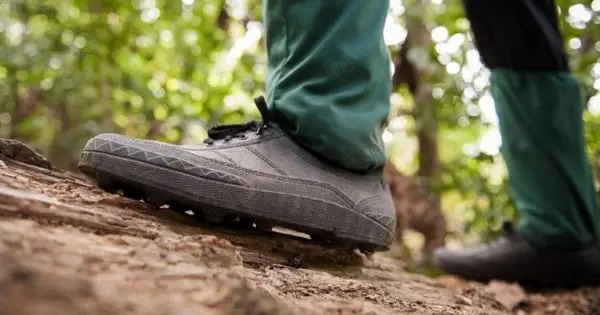
The Adidas Kampung’s reputation is not built solely on nostalgia or national pride.
In 2011, Sabah athlete Danny Kuilin Gongot won the women’s category of the Mount Kinabalu International Climbathon while wearing Adidas Kampung shoes, further cementing their legendary status among outdoor enthusiasts.
It was a moment that showed us that technological advancement and practical effectiveness are not always synonymous, particularly in environments where local knowledge often proves more valuable than imported expertise.
While international sportswear brands continue to develop increasingly sophisticated trail-running technologies, one of Malaysia’s most celebrated climbing achievements was accomplished in a rubber shoe commonly sold at hardware shops.
There’s probably a lesson in that somewhere…
Part of what makes the Adidas Kampung so compelling is that it never attempted to become culturally significant.
There was no carefully crafted brand narrative, no influencer marketing strategy, and no limited-edition collaboration with a Japanese streetwear label. Its reputation emerged organically through decades of use by people who cared less about aesthetics than they did about whether their footwear would survive another day in the jungle.
Ironically, this authenticity has made the Adidas Kampung more culturally relevant than many products specifically designed to achieve cultural relevance. In an age where brands spend enormous resources attempting to manufacture heritage and authenticity, the Adidas Kampung possesses both simply by virtue of having existed, largely unchanged, for more than half a century.
Just last week, the Adidas Kampung acquired yet another chapter in its already improbable history.
A Canadian content creator named Oliver, who relocated from Montreal to Apin-Apin in Sabah’s Keningau district to pursue farming, went viral after posting a glowing review of what he enthusiastically described as his new “Adidas hiking shoes.”
In the video, Oliver praised their grip, described them as an “absolute game changer,” and claimed they allowed him to move “like a ninja” while traversing difficult terrain.
The detail that elevates this story from merely charming to almost absurdly poetic is that Oliver now lives in Keningau, the very district where the Adidas Kampung was reportedly first developed more than fifty years ago.
In other words, a Canadian man moved halfway across the world to rural Sabah, discovered Malaysia’s most iconic jungle shoe, declared it superior to expensive hiking footwear, and unknowingly did so in the birthplace of the Adidas Kampung itself.
That’s the sort of narrative arc that would probably be rejected by a marketing agency for being too neat and sentimental. Then again, the Adidas Kampung has never needed a marketing department.
For more than 50 years, it has simply continued doing what it was originally designed to do: quietly navigating mud and mountains, as well as unapologetic Malaysian life and culture.
For more cool stuff, click here.
Follow JUICE on Facebook, Instagram, and TikTok.

Missed these?

How To Achieve The Emotional Impact Of A Gothic Cathedral
In a world increasingly defined by 280-character hot takes and TikTok’s fleeting bursts of serotonin, you might find yourself yearning for something… Timeless.


The Gruesome 1992 Triple-Murder Story Behind The ‘Haunted’ Jalan Turi Bungalow in Bangsar
This horrifying story is indeed true.