
 Get Audio+
 Hot FM
 Kool 101
 Eight FM
 Fly FM
 Molek FM
The British Once Airdropped Cats Over Sarawak… On A Real RAF Mission
 Thirsty for JUICE content? Quench your cravings on our Facebook, Instagram, TikTok and WhatsApp
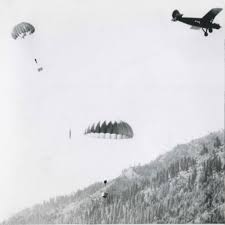
In 1960, residents of rural Sarawak glanced upward and saw something most people only read about in odd trivia columns: cats parachuting from the sky.
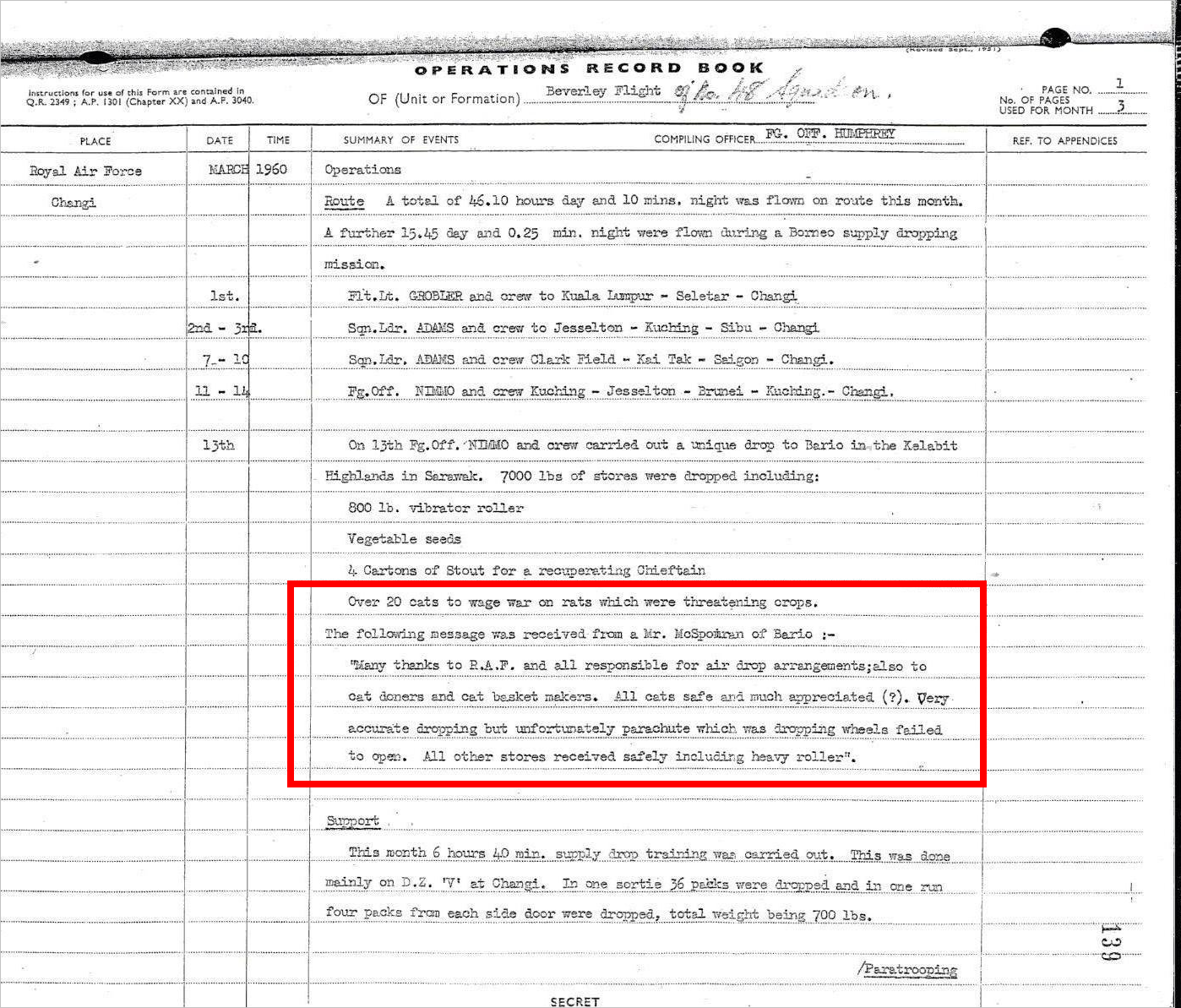
This was not satire, nor a prank. It was an actual British military operation known as ‘Operation Cat Drop’, carried out by the Royal Air Force. From their base in Singapore, the RAF flew cats in crates to remote villages in what was then the British colony of Sarawak, now part of Malaysia.
Each crate came with a parachute. The mission was designed to tackle a growing rat infestation, but the real story behind it is a textbook example of how human meddling with nature often leads to chaos.
The rat problem did not appear overnight. Its roots can be traced to the widespread post-war use of DDT, a potent insecticide praised in the 1950s for its mosquito-killing power. DDT was sprayed liberally across homes, walls, and entire villages in Southeast Asia to combat malaria. Initially, it worked. Mosquito populations shrank, malaria rates dropped, and the World Health Organization hailed the effort as a success.
Then, slowly, other creatures began to vanish.
Domestic cats, which were essential in controlling rodent populations, began dying off. Researchers later proposed several reasons. Some cats may have licked DDT off their fur after rubbing against treated walls. Others may have eaten lizards or insects that had absorbed the chemical. Either way, by the time authorities realised what was happening, the feline population in some districts had been wiped out. Without cats, the rats multiplied.
The infestation grew severe. Rats were attacking grain stores, chewing through homes, and devouring rice crops. The pest control solution ended up creating a new pest crisis. In response, British colonial officials scrambled for a fix. The most direct method was to reintroduce cats, but reaching isolated villages in the jungles of Borneo was no easy task.
So they did what any good logistics team would do: they dropped them from the sky.
News reports from the time confirm that only 23 cats were involved in the drop, not the mythical 14,000 that often floats around on the internet.
A few days prior to the operation, another article referenced the recruitment of 30 cats in preparation. The cats were carefully crated, fitted with parachutes, and air-dropped into the affected areas. It sounds absurd, but by all official accounts, it worked. The cats landed safely, got to work, and helped stem the rat invasion.
The story of ‘Operation Cat Drop’ has since become legend. Depending on who is telling it, it’s either a quirky colonial oddity or a cautionary tale about the perils of short-sighted environmental interventions. In academic circles, it is often cited in discussions about systems thinking.
This approach stresses the importance of seeing ecosystems as interconnected webs, where disrupting one part can trigger a cascade of unintended consequences.
Similar incidents involving DDT and disappearing cats have been reported in Thailand, Bolivia, and Mexico, with corresponding spikes in rodent populations. In many of these cases, the deaths were linked to grooming behaviour after cats came into contact with sprayed surfaces. While DDT certainly saved lives by curbing malaria, the fallout shows what happens when we charge into complex ecological systems without a long-term plan.
‘Operation Cat Drop’ is also not the only example of animals being delivered from the sky.
In the 1950s, conservationists in the US used parachutes to relocate beavers into wilderness areas in Idaho. More recently, the Utah Division of Wildlife Resources has been restocking alpine lakes by dumping thousands of live fish directly from planes. The fish don’t get parachutes, but apparently survive the plunge thanks to their small size and the speed of the drop.
Outlandish as it may sound, ‘Operation Cat Drop’ is not just an amusing historical footnote, but another example of both human ingenuity and human error, reflecting the way we often try to fix problems we created without fully grasping the chain reactions that follow. And for Sarawakians in 1960, it was a literal rescue mission. Had the rats continued unchecked, the consequences could have been devastating for food security and public health.
Today, the tale lives on in university lectures, public health journals, environmental ethics case studies, and even a dedicated website by University of Iowa professor Patrick O’Shaughnessy. The UK Ministry of Defence has also acknowledged it in their archives, as both farcical and sobering.
Sarawak’s cat drop might have seemed ridiculous, but it worked. The real absurdity was that it was ever needed in the first place!
More on JUICE.

Missed these?

How To Achieve The Emotional Impact Of A Gothic Cathedral
In a world increasingly defined by 280-character hot takes and TikTok’s fleeting bursts of serotonin, you might find yourself yearning for something… Timeless.



The Gruesome 1992 Triple-Murder Story Behind The ‘Haunted’ Jalan Turi Bungalow in Bangsar
This horrifying story is indeed true.