
 Get Audio+
 Hot FM
 Kool 101
 Eight FM
 Fly FM
 Molek FM
The Child, The Nails & The Wire: The Unsolved Murder Of Ang May Hong
 Thirsty for JUICE content? Quench your cravings on our Facebook, Instagram, TikTok and WhatsApp

This article contains graphic descriptions of sexual violence and murder that some readers may find distressing.
On a quiet Sunday morning in 1987, an ordinary walk to the market ended in one of Malaysia’s most horrifying and still-unsolved child murder cases.
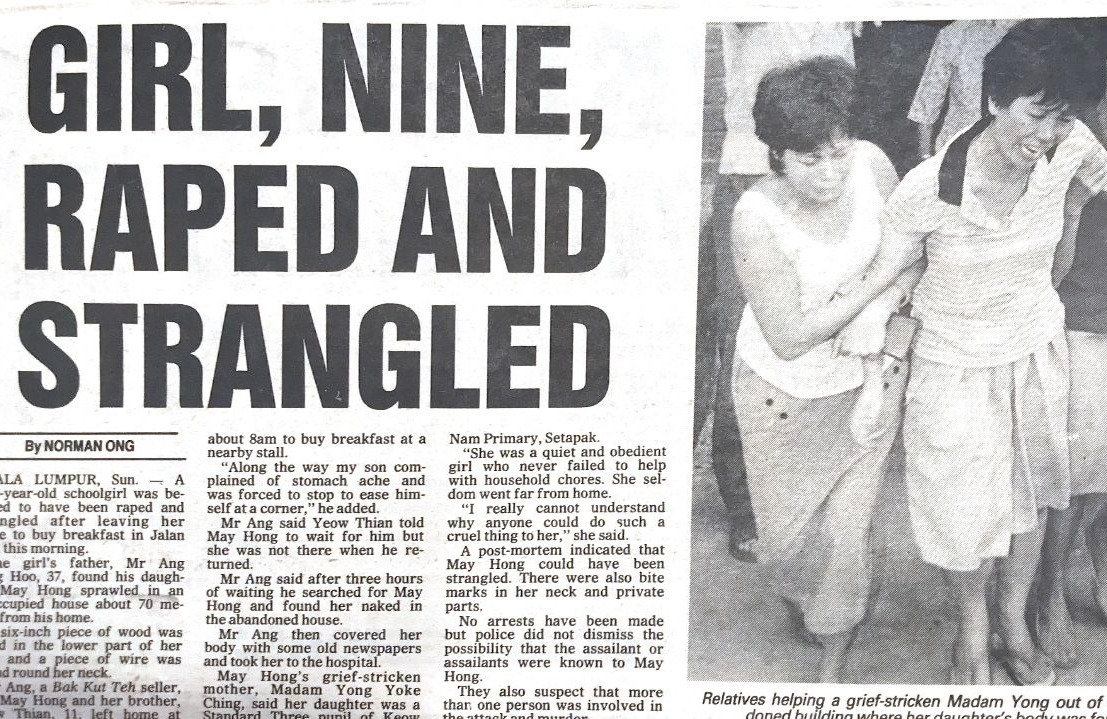
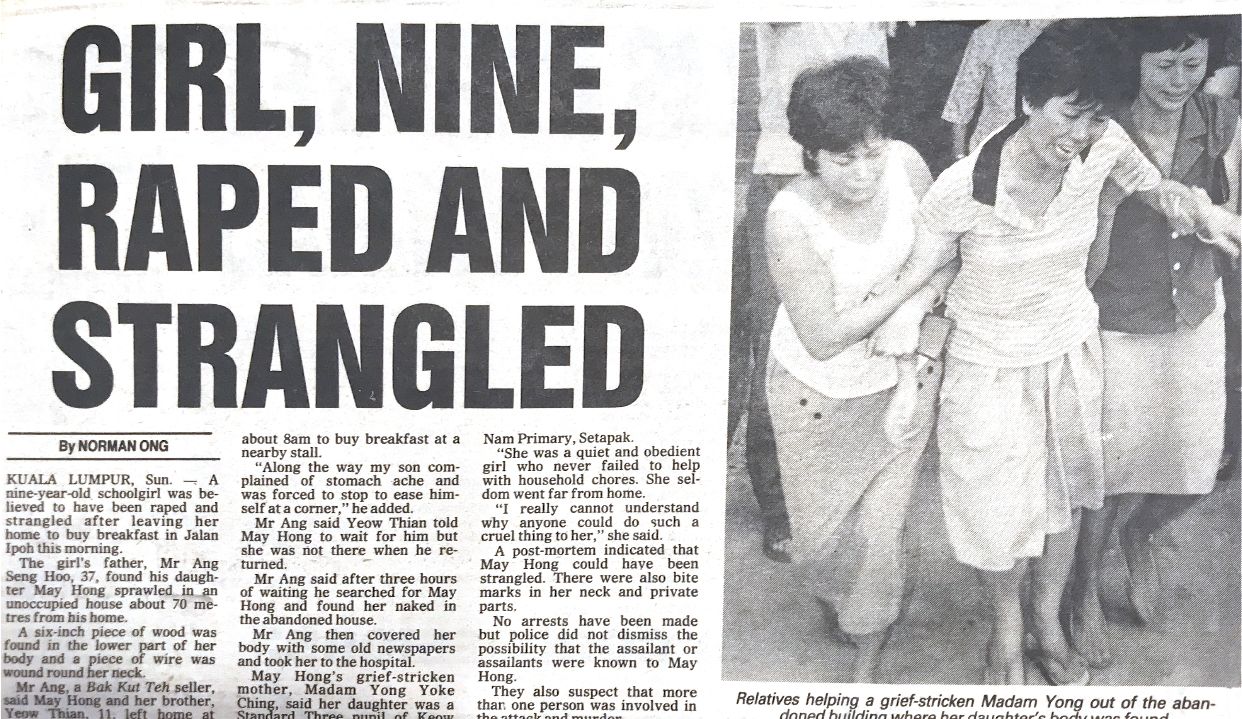
It was 12 April 1987. Nine-year-old Ang May Hong left her family’s home on Jalan Ipoh, Kuala Lumpur with her older brother Ang Yeow Thian, to buy breakfast at a nearby stall.
Along the way, Yeow Thian, aged 11, was struck by a sudden stomach ache and hurried back home, asking his sister to wait for him. When he returned around ten minutes later, Ang had disappeared.
For three tense hours, the family and neighbours searched the area. Their search ended in horror when Ang’s mother, Yong Yoke Chin, discovered her daughter’s unclothed body inside an abandoned house, a place known to be frequented by drug addicts.
A wire had been looped tightly around Ang’s neck, and a metre-long wooden stick studded with nails had been forced into her private parts, tearing through her internal organs and piercing her heart.
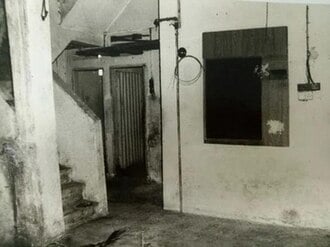
Ang’s body was covered in bruises and bite marks. An autopsy later confirmed she had been raped and sodomised before being strangled to death.
Police opened a murder investigation, an offence that carries the death penalty in Malaysia. Based on the number of bite marks on Ang’s neck, body, and genitals, investigators believed at least eight people could have been involved.
There were suspicions the killers were drug addicts; one suspect was described as a Chinese man who could speak Tamil. The autopsy also suggested that Ang may have bitten one of her attackers in a desperate struggle.
Despite exhaustive efforts, the case quickly ran cold. Police arrested three suspects, including a regular customer at Ang’s father’s bak kut teh stall, but none of their dental impressions matched the bite marks found on Ang’s body, and all were released.
At the time, the investigation was limited by the lack of advanced forensic tools such as DNA testing. Authorities offered a reward of RM10,000, later increased to RM20,000, hoping someone might come forward with crucial information, but no solid leads emerged.
Needless to say, the brutality of the crime shocked the nation.
Across the country, charity events raised funds to help the investigation. More than a hundred people gathered outside Ang’s father’s shop, calling for justice and better protection for children.
At the protest, a short play depicted the dangers of sexual predators preying on young girls. Out of desperation, a fisherman even hired a religious master to perform rituals aimed at revealing the killers.
In the same year, the Citizens Against Rape (CAR) campaign was launched with the support of the All Women’s Action Society (AWAM) to raise awareness about sexual violence and advocate for legal reforms. Ang’s family publicly appealed for the perpetrators to surrender, offering forgiveness if they confessed. Over the years, women’s rights groups continued to cite Ang’s case when calling for change.
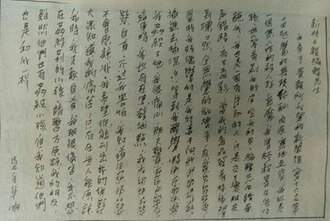
Shortly after the murder, local newspapers received anonymous letters from someone claiming to be among Ang’s killers.
In a letter to Chinese Daily, the writer described being part of a group of drug addicts who had raped and killed Ang and other girls. Later, he offered to surrender if guaranteed forgiveness and RM30,000 to support his family. The demands sparked public anger.
In a final letter, he admitted he had lied about his involvement, writing that he acted out of frustration with the intense media attention. Police were never able to confirm his identity or whether the confession held any truth.
Ang’s family endured further tragedy the following year when, in August 1988, her brother Yeow Thian died of liver disease at just twelve years old. That same year, the family’s bak kut teh shop was in the news again after a fight among patrons turned deadly, killing one man and injuring several others.
By 2007, twenty years after Ang’s death, her parents shared that police updates had become rare over time and that they had chosen to leave the matter to fate, though the pain of losing their daughter remained.

Decades later, Ang May Hong’s murder is still remembered as one of Malaysia’s most shocking unsolved crimes.
In 1996, it was named among the most cold-blooded murders of the previous decade. In the years since, reports have highlighted rising rates of sexual violence in Malaysia. By 1998, an average of 4.1 rape cases were reported daily, up from 2.4 a day in 1993. Women’s groups continued to push for stronger laws, often pointing to Ang’s case to show the need for reform.
In 2013, the brutality of her murder was compared to the 2006 rape and killing of Chee Gaik Yap. Over time, Ang’s story has resurfaced in newspaper series and retrospective articles about Malaysia’s darkest crimes.
In 2021, police said the investigation remained open and that advances in forensic science might still help bring answers.
Journalists who covered the story remember it vividly. One retired reporter recalled the sorrow she felt seeing Ang’s body and how even mortuary workers were visibly shaken by the cruelty inflicted on such a young child; a sight that would leave a lasting mark on everyone who witnessed it firsthand.
In the decades since, Ang May Hong’s case has continued to echo through Malaysia’s collective memory, not only as a symbol of an unsolved crime, but as a reminder of the need for systemic change. Her story resurfaced whenever new cases of violence against women and minors emerged, prompting calls for tougher laws and better protection measures.
Despite the years that have passed, the file on Ang’s murder remains officially open.
Police have expressed hope that advancements in DNA testing and modern forensic methods could one day identify the perpetrators. Families of other victims and women’s rights groups continue to invoke Ang’s name in campaigns against sexual violence, determined that her story should never be forgotten.
More than thirty years on, there is still no closure for Ang’s loved ones. The haunting questions of who killed her, why, and how so many could have inflicted such cruelty without consequence linger painfully unanswered.
Our thoughts and prayers remain with Ang May Hong and her family, who must carry the weight of this unimaginable loss for the rest of their lives.

Missed these?

How To Achieve The Emotional Impact Of A Gothic Cathedral
In a world increasingly defined by 280-character hot takes and TikTok’s fleeting bursts of serotonin, you might find yourself yearning for something… Timeless.

The Gruesome 1992 Triple-Murder Story Behind The ‘Haunted’ Jalan Turi Bungalow in Bangsar
This horrifying story is indeed true.