
 Get Audio+
 Hot FM
 Kool 101
 Eight FM
 Fly FM
 Molek FM
This Ladder-Climbing Kampung Dog Breed Is So Rare, It’s Almost Extinct
 Thirsty for JUICE content? Quench your cravings on our Facebook, Instagram, TikTok and WhatsApp
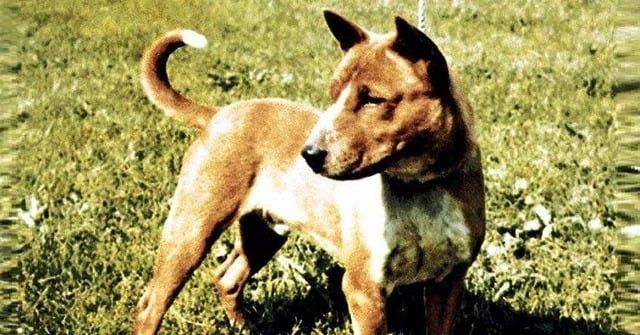
In the dense jungles of Peninsular Malaysia, amidst the vibrant flora and fauna, resides a dog breed so rare and unique that even many Malaysians are unaware of its existence.
Meet the Telomian—a wiry, agile companion originally raised by the Temuan branch of the Orang Asli, adapted to a lifestyle very unlike the domesticated, couch-hogging lapdogs of city life. This is a dog that scales ladders, hunts snakes, and opens doors with its paws—literally.
The Telomian’s story begins in the remote villages near the Telom River in Pahang. The Orang Asli communities built their homes on stilts, both to avoid wild animals and to deal with flooding. Naturally, their dogs had to adapt. Telomians became skilled climbers, nimble enough to ascend ladders and patrol raised homes like furry sentinels.
You won’t find many breeds capable of climbing a ladder.
Not because it’s difficult, but because they’ve never had to. The Telomian had to. That necessity, over time, shaped a dog that’s both highly intelligent and physically remarkable.
Beyond their climbing skills, Telomians earned their keep as vermin hunters. They were known to kill snakes and rats, especially useful in jungle settings where such pests are more than just a nuisance. They didn’t just protect homes, they protected lives. According to Suhaimi Ghani, who documented their role among the Temuan people, these dogs weren’t “pets” in the typical sense, they were jungle-trained bodyguards.
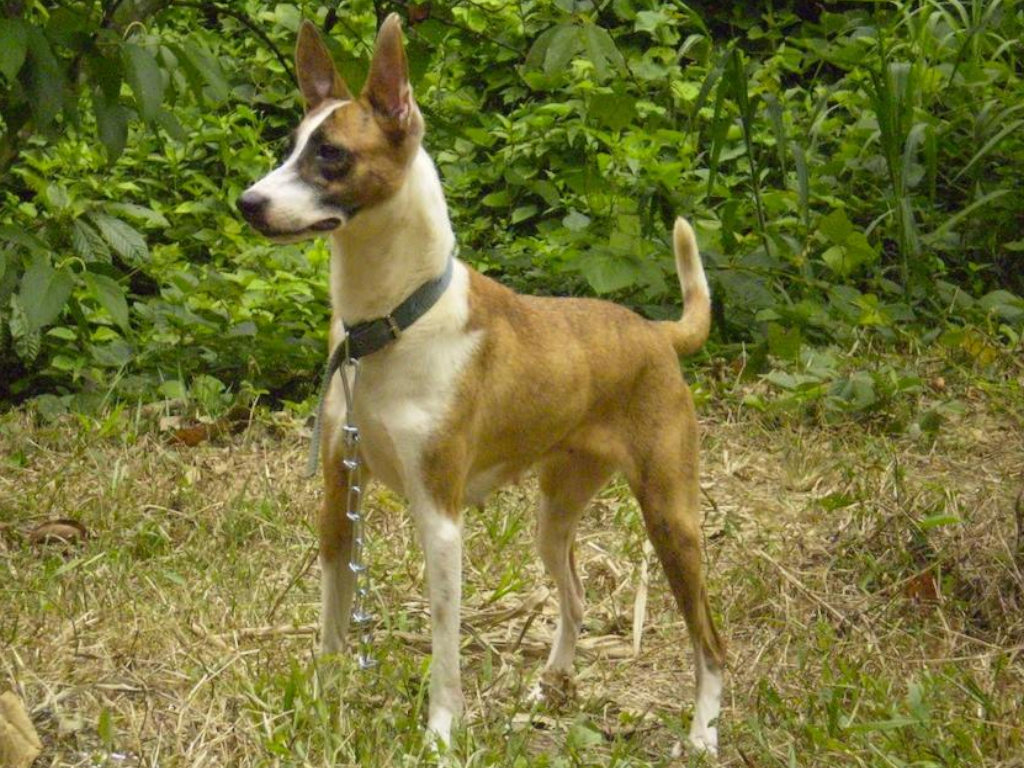
The breed remained largely unknown to the outside world until 1963, when American anthropologist Dr. Orville Elliot encountered them and brought a pair back to the United States.
A second pair followed in 1973. That’s it! Just four dogs.
Every Telomian in the U.S. today comes from this incredibly limited founding population, making them one of the rarest breeds in the world. Because of the breed’s lack of documentation and its Indigenous roots, it has never been officially recognised by major kennel clubs. It doesn’t conform to modern breed standards—and that’s part of its charm.
Medium-sized and sturdy, Telomians typically stand between 15 to 19 inches tall and weigh around 8 to 12 kilograms. They have short coats in shades of tan, black, brown, or white, upright ears, and tails that curl over their backs. Their bodies are built more for jungle agility than aesthetic symmetry, and some even sport blue-black tongues, a trait also seen in Chows.
Their musculature isn’t the show-dog type, it’s utilitarian. The Telomian is lean, fast, and built for the wild.
One of their more unusual traits is their vocalisation.
Instead of typical barking, Telomians are known to produce yodel-like howls, similar to Basenjis or New Guinea Singing Dogs. This isn’t random noise—it’s functional. In dense jungles, a bark gets lost. A melodic howl carries further. It helped them communicate over distance, and probably served as an alarm system of sorts.
Telomians are smart—problem-solver smart—but they also have a bit of that “jungle freelancer” independence. They’re not known for strict obedience, and they won’t respond well to brute-force training. It’s a partnership or nothing. When respected and challenged, they thrive. When bored, they’ll find ways to entertain themselves. Sometimes destructively.
They’re great with families if properly socialised, but not ideal for someone expecting golden retriever-style loyalty and docility.
Today, true Telomians are difficult to find even in Malaysia.
While village dogs might resemble them due to interbreeding, the pure strain is mostly found in remote Orang Asli communities. In the United States, they exist only in small pockets among breed enthusiasts, maintained in relative obscurity by people who value the Telomian’s cultural and evolutionary significance. Because that’s what this is! Not just a dog breed, but a living expression of Malaysia’s Indigenous history.

As DogsPlanet notes, the Telomian isn’t just rare. It’s virtually unknown.
That’s both sad and oddly fitting. This isn’t a creature meant for show rings or Instagram fame. It’s a working-class survivalist. It belongs to the forests, the stilt houses, the communities who never needed a pedigree to know they had something extraordinary on their hands.
We couldn’t uncover much more than the basic facts and history of the Telomian breed. However, it’s important to note that the Telomian isn’t recognised by the American Kennel Club or any other major kennel associations, which contributes to the uncertainty surrounding any health issues that may affect the breed.
Interestingly, most purebred Telomians are now found only in the United States. It’s believed that the ones remaining in Malaysia have likely been crossbred. The Telomians in America are thought to be direct descendants of the two pairs originally imported in the 1960s and 1970s.
So the next time someone tells you about their fancy doodle mix or purebred import, ask them if their dog can climb a ladder. Then tell them about the Telomian—the jungle dog that’s not only from here, but of here.
Paws what you’re doing and check out Furever Friends for more stories, videos, and updates!


Missed these?

Remembering The Cryptic Death Of Nora Quoirin, Whose Undressed Corpse Was Found In A M’sian Forest
We wish justice upon Nora’s family.


The Gruesome 1992 Triple-Murder Story Behind The ‘Haunted’ Jalan Turi Bungalow in Bangsar
This horrifying story is indeed true.