
 Get Audio+
 Hot FM
 Kool 101
 Eight FM
 Fly FM
 Molek FM
The Murder Of Lai Ying Xin & First Use Of The Amended Death Penalty Law
 Thirsty for JUICE content? Quench your cravings on our Facebook, Instagram, TikTok and WhatsApp

On a quiet evening in Kulai, Johor, 16-year-old Lai Ying Xin vanished.
It was 11 September 2008: A date that would leave an indelible mark on Malaysian criminal history and provoke nationwide outrage that persists to this day.
A bright, beautiful, and determined teenager, Lai’s life was violently cut short in a case that shocked the country not only for its brutality but for the age of the perpetrators and the legal and moral questions that would follow.
Sixteen years later, the case once again made headlines. Not for new evidence or an appeal for justice, but because one of the convicted murderers, Teh Kim Hong, had his death sentence commuted to 40 years’ imprisonment.
The reason? A sweeping reform of Malaysia’s justice system that abolishes the mandatory death penalty.
Lai Ying Xin, A Girl with Big Dreams
Lai Ying Xin was the third of four children in what reports describe as a modest Chinese Malaysian family. Born on 16 April 1992, she was a high achiever at SMK Sultan Ibrahim, Kulai. Teachers remembered her as polite and diligent; friends called her cheerful and ambitious.
To fund her dream of studying abroad in Taiwan and eventually becoming a flight attendant, Lai took on a part-time job as a salesgirl at a shop in a local shopping centre. She was beautiful, in that effortlessly radiant way teenage girls can be, with a quiet resilience that people close to her said made her stand out. Her future shimmered just beyond the horizon.
But on that evening in September 2008, Lai never came home from work.

Abduction, Murder, And A Macabre Deception
According to court records, Lai was abducted on her way home from work by four young men: Teh Kim Hong (then 22), Wong Soon Heng, Leong Soon Long, and Wong Kah Wai; the last three all under 18. They were, by all accounts, not hardened criminals. They were former schoolmates of Lai’s and knew her personally.
Their motives were chilling in their banality: Money. After abducting her, the group strangled Lai to death. They then attempted to dispose of her body by burning it in an abandoned house in Taman Nam Tak. After she was dead, the group called her family and demanded a ransom of RM10,000, pretending she was still alive.
Lai’s charred body was discovered days later, hidden in a gunny sack.
The brutality of the crime was made worse by the familiarity between victim and perpetrators. This was not a random act of violence. It was betrayal.
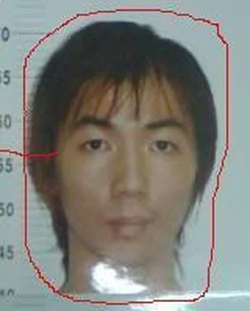
The Legal Proceedings
The case went to trial in 2010. Given their ages, the defendants were tried under varying legal frameworks. Wong Kah Wai was eventually acquitted due to lack of evidence. The remaining three were found guilty of murder and kidnapping.
The sentence was swift and decisive:
•Teh Kim Hong, being 22 at the time of the crime, was handed the mandatory death penalty — a requirement under Malaysian law for murder.
•Wong Soon Heng and Leong Soon Long, as minors, were spared the gallows but sentenced to be detained “at the pleasure of the Sultan”, meaning they would remain incarcerated indefinitely unless the Sultan intervened.
The public rejoiced. Justice, it seemed, had prevailed. Lai’s family, though heartbroken, found some comfort in the finality of the court’s decision.
In 2023, Malaysia abolished the mandatory death penalty for a number of serious crimes, including murder.
Judges were now given discretion to consider individual circumstances, rehabilitation potential, and other mitigating factors before sentencing. While the death penalty remained legal, it was no longer automatic.
This reform was part of a broader global trend questioning the morality and efficacy of capital punishment. But in Malaysia, where public trust in the legal system is often fragile and emotional investment in high-profile cases runs deep, the reaction was mixed, especially when past convictions became subject to review.
In early 2024, Teh Kim Hong applied to have his sentence reviewed.
On 16 May 2024, the Federal Court commuted Teh’s death sentence to 40 years in prison and 17 strokes of the cane, starting from the date of his arrest in 2008. This means he could be released as early as 2048, when he would be in his 60s.

The Family’s Response
Lai Ying Xin’s parents were present in court during the resentencing hearing. According to press reports, her father spoke through tears, expressing disbelief that a man who took his daughter’s life might one day walk free.
“We are the ones with a life sentence,” he reportedly told reporters outside the courtroom. “We lost our daughter forever. He still has a life.”
The family’s anguish was echoed by many on social media, where the news of Teh’s commutation went viral. Outrage poured in from citizens across the country who felt the legal reforms had overcorrected, prioritising the rehabilitation of a murderer over justice for a young girl who never got to grow up.
Advocates for the legal reforms argue that the death penalty is inhumane and irreversible, and that no justice system is immune to error. They emphasise that people, especially those who commit crimes in youth, can change. The intention of the law, they argue, should not only be to punish but also to rehabilitate.
But opponents counter that some crimes are so heinous, so deliberate, that mercy is a betrayal of justice. To them, Lai Ying Xin’s murder—cold, premeditated, and cruel—is one of those crimes.
There are no neat conclusions in the case of Lai Ying Xin. Only irreconcilable truths:
•A girl is gone.
•Her killers were young, but not innocent.
•A justice system has changed.
•A family still mourns.
•A nation remains conflicted.
This case, revisited through the lens of reform, forces us to confront painful questions: What is justice? Can a killer truly repay a debt to society? And most haunting of all… Who gets to decide when a life taken has been atoned for?
More true crime on JUICE.

Missed these?

Malaysian Mystery Memoirs: The Roommate
Got a spare bed in your room?